Biological grounding
Cells receive, integrate, and pass signals through networks. Studying those mechanisms keeps my ideas about learning and memory grounded in biology.
How understanding is built.
From how we think to how we investigate.
I want to study how understanding is built, from neural mechanisms and cognitive processes to the tools people use to learn, investigate, and keep track of changing ideas.
A paper becomes part of a learner’s intellectual trail.
BREADCRUMBS / INTELLECTUAL TIMELINE CONCEPT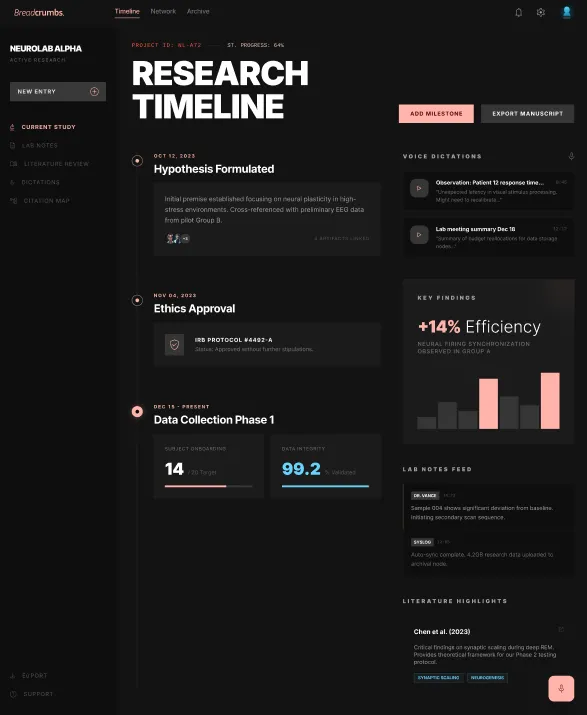
An intellectual notebook for underclassmen and high-school students: papers, notes, and annotations connected along a timeline of developing questions.
EARLY V.1 MOCKUP · PRE-PIVOT DIRECTION
The pictured prototype predates the current notebook concept.
Simonides anchors the method of loci legend: memory becomes a spatial art of placing images in ordered locations.
A collapsed hall becomes the origin myth for reconstructing memory through spatial positions.
Work with Ben Kellum on making memory research more approachable through education and public engagement.
TIMELINE PROTOTYPE → INTELLECTUAL NOTEBOOK
A development direction, not a finished product.

An exploration of how students learn together, developed through Scarlet Pitch and a sequence of Figma wireframes and prototypes.
DESIGN ARTIFACTS · WIREFRAMES / PROTOTYPES
“A source supports this sentence.”
SOURCE TEXT MATCHThe wording matches an accessible source passage.
Modular Dev Utils is a portable citation-verification utility I built. It checks source evidence, distinguishes direct wording from paraphrase, and marks claims that still need a human review.
ROLE · AUTHOR / IMPLEMENTATION
STATUS · REUSABLE PACKAGE
Undergraduate research through the Aresty Summer Science Program, involving viral tracing and fluorescence microscopy in work related to neural circuitry and pain processing.
These projects are connected by a change in perspective: from pitching a solution to examining how people learn, investigate, and form better questions.
Cognitive science and neurobiology now inform how I approach software: design around attention, learning, and memory, while leaving room for the person’s own effort and judgment.
Attention is a limited resource. Good tools should spend it carefully.
Three perspectives on the same design questions: what a learner can attend to, remember, and check.
The biological mechanisms underlying perception, action, learning, and behavior.
Neural implementation ↔ computational explanation
Biology grounds the design questions. This model follows a signal from dendritic input to synaptic release.
Cell body / The soma maintains the cell and integrates incoming activity. Its nucleus contains genetic material.
At rest
A simplified, slowed-down illustration of a myelinated neuron
Tracing and imaging make connections inspectable. That attention to method carries into how I think about evidence in software.
Engineered viruses carry fluorescent labels along neural connections, so we can see which regions talk to which.
Imaging the labeled tissue turns those connections into a map you can actually look at, and count.
Cognition doesn't just arise from one signal in one place. Mapping circuits is a way of asking how network-level behavior gives rise to complex faculties.
From cells to experience, each explanatory level reveals something different about the person using an interface.
Cell body / The soma maintains the cell and integrates incoming activity. Its nucleus contains genetic material.
At rest
Cells receive, integrate, and pass signals through networks. Studying those mechanisms keeps my ideas about learning and memory grounded in biology.
Lab work makes me attentive to method: what was measured, how it was measured, and what remains uncertain. I want research tools to preserve that context.
A model describes what a process does; an implementation shows how it runs. That distinction informs my interest in AI tools whose outputs can be inspected and checked.
A biological description and a person’s understanding are not interchangeable. I want to design for the person doing the work: their goals, attention, and judgment.
A diagram cannot capture what using a tool feels like. My aspiration is to connect rigorous models with thoughtful design, and test whether a tool genuinely helps people understand.
“Understanding a system at one level doesn’t always tell us everything we want to know about it.”
A research question evolves as I move between a cell, a circuit, a model, and an experience.
Knowing something and perceiving it are not always the same. The Müller–Lyer illusion is a small example: the lines are equal, but may not look equal.
That tension interests me as a builder. Clear evidence matters, but so does how information is presented. I want to explore interfaces that make verification easier and keep human judgment in the loop.
It’s a question to investigate, not a claim that one illusion tells us how every mind works.
Measurement settles the geometry, not the experience of seeing it.
"Both lines are the same length. Your brain has simply developed strong opinions about arrowheads."
A short reflection in progress: different explanatory levels can illuminate the same mind, while leaving different questions open.
Research tools could do more than store papers. I’m interested in ways to preserve context, connect ideas, and support understanding without optimizing for distraction.
A question I’m still working through: how can technology extend human capability while leaving room for effort, judgment, and agency?
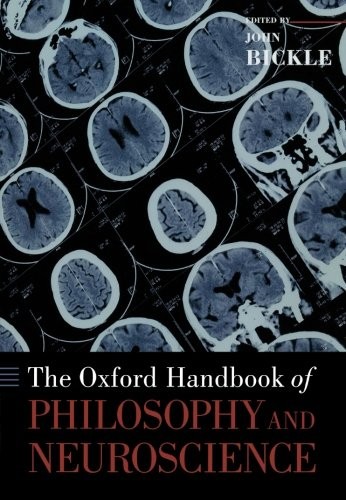
Edited by John Bickle
Paperback · 2013
ISBN-13: 9780199965502
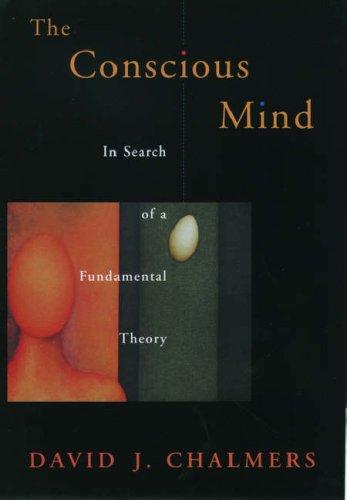 Consciousness × explanation
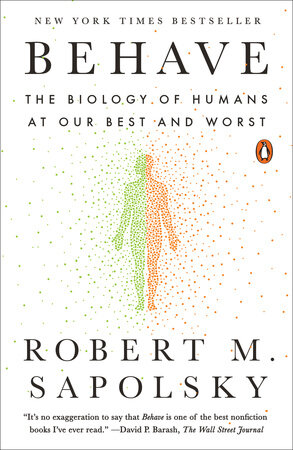 Biology × human behavior
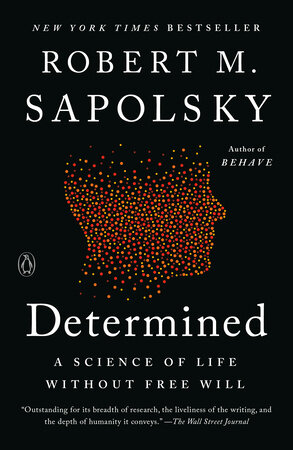 Behavior × free will
I’m an undergraduate at Rutgers University–New Brunswick studying Cell Biology & Neuroscience. Lab research, cognitive science, and product experiments shape what I choose to build.
I keep returning to the learner’s desk: what helps someone follow a question, inspect evidence, and keep a record of changing thought?